Meesho has become India's largest reselling and direct-selling platform, with over 130 million monthly active users and more than 15 lakh active sellers as of 2026. What makes Meesho unique is its zero-commission model — unlike Flipkart or Amazon, Meesho does not charge sellers any commission on sales, making it the most profitable platform for new and small sellers in India.
If you have been thinking about starting an online business from home, Meesho is the easiest place to begin. You don't need a GST number to start (for orders below ₹40 lakh/year), you don't need a website, and you can literally start with zero investment by dropshipping from suppliers.
In this guide, we will walk you through every single step — from creating your seller account to dispatching your first order — so you can start earning within a week.
Step 1: Register as a Meesho Supplier (Seller)
First, let's create your Meesho seller account. The process is completely free and takes about 15 minutes.
What You Need to Register
- Mobile number — for OTP verification
- Email address — for account communication
- Bank account details — where Meesho will send your payment (account number, IFSC code)
- Aadhaar card — for identity verification
- PAN card — required if your annual turnover exceeds ₹2.5 lakh
- GSTIN — optional for turnover below ₹40 lakh/year; required above that
- Pickup address — where the courier will come to collect your packed orders
Registration Steps
- Go to supplier.meesho.com on your browser
- Click "Start Selling"
- Enter your mobile number and verify with OTP
- Fill in your business details (you can select "Individual" if you don't have a registered business)
- Add your bank account details (double-check IFSC code!)
- Upload your Aadhaar for verification
- Set your pickup address (this is where the courier partner will come to collect packages)
- Your account will be verified within 24-48 hours
Step 2: Choose What Products to Sell
This is the most important decision you'll make. The right product category can make or break your Meesho business. Here are the top-selling categories on Meesho in 2026:
| Category | Average Price Range | Margin | Return Rate | Best For |
|---|---|---|---|---|
| Women's Kurtis Top Seller | ₹250 – ₹800 | 25-40% | 20-30% | New sellers with fashion sense |
| Sarees | ₹300 – ₹1,500 | 30-50% | 15-25% | Sellers with textile contacts |
| Men's T-Shirts | ₹200 – ₹600 | 20-35% | 25-35% | Sellers targeting young men |
| Home Decor | ₹150 – ₹500 | 30-45% | 10-15% | Low return rate sellers |
| Jewellery | ₹100 – ₹400 | 40-60% | 8-12% | High margin seekers |
Step 3: Source Your Products
You have three main options for sourcing products:
Option A: Local Wholesale Markets (Best for Beginners)
Visit wholesale markets in your city. Some famous ones:
- Surat: Textile Market (sarees, dress materials, kurtis)
- Delhi: Gandhinagar Market, Lajpat Nagar (all clothing)
- Jaipur: Johari Bazaar (jewellery, handicrafts)
- Mumbai: Crawford Market, Mangaldas Market (fabrics)
- Kolkata: Burrabazar (wholesale clothing)
Buy small quantities first (10-20 pieces per design) to test what sells. Only increase quantity after you see consistent orders.
Option B: Online Wholesale Platforms
- IndiaMART — find manufacturers and get bulk pricing
- TradeIndia — connect with verified suppliers
- GlowRoad Supplier Network — specifically designed for resellers
Option C: Manufacture Your Own
If you have access to tailors or small manufacturing units, you can create your own designs. This gives you the highest profit margin (50-70%) and the ability to create a unique brand. Many successful Meesho sellers started by getting 5-10 designs stitched by local tailors.
Step 4: Create Your Product Listings
Great listings are the difference between 5 orders a day and 50. Here's how to create listings that convert:
Product Title Formula
Use this structure: [Brand/Material] + [Product Type] + [Key Feature] + [Occasion]
Examples:
- ✅ "Pure Cotton Printed A-Line Kurti for Women — Casual Daily Wear"
- ✅ "Georgette Floral Saree with Unstitched Blouse — Wedding & Party Wear"
- ❌ "Kurti" (too short, no keywords)
- ❌ "Beautiful latest new design 2026 trending kurti best quality" (keyword stuffing)
Product Photos (Most Important!)
- Use natural lighting — shoot near a window during daytime
- Use a plain white or light background
- Show the product from multiple angles (front, back, close-up of fabric)
- Include a size reference (model wearing the garment is best)
- Minimum 4-5 photos per listing
- Image size: at least 800 x 800 pixels
Pricing Strategy
Meesho does not charge commission, but you need to account for these costs:
- Product cost — what you pay to buy/make the product
- Packaging cost — courier bags (₹3-5), polybags (₹1-2), labels
- Shipping cost — Meesho charges a flat shipping fee which the customer pays, but returns shipping is deducted from your payment
- Return cost — assume 20-30% of orders will be returned; factor this into your pricing
Pricing Formula:
Selling Price = (Product Cost + Packaging Cost) ÷ (1 - Expected Return Rate) × (1 + Desired Profit Margin)
Example: Product costs ₹200, packaging ₹5, 25% return rate, 30% profit margin:
Selling Price = (200 + 5) ÷ (1 - 0.25) × (1 + 0.30) = ₹355
Step 5: Your First Order — What Happens Next?
When a customer places an order, here's the exact flow:
- Notification: You receive an order notification on the Meesho Supplier app
- Accept the order: You have a limited time window to accept (usually 24 hours)
- Download shipping labels: Go to your Meesho Supplier panel → Pending Orders → Download Labels (PDF)
- Pack the product: Place the product in a polybag, then in a courier bag
- Print and paste the label: Print the shipping label and paste it on the package
- Schedule pickup: Schedule a courier pickup from your registered address
- Handover to courier: The courier partner picks up the package from your door
Step 6: Optimize Your Dispatch Workflow
As your orders grow from 5/day to 50+/day, your biggest bottleneck becomes order dispatch — specifically, sorting labels, matching them to products, and packing efficiently. Here's the professional workflow used by high-volume Meesho sellers:
- Download all pending labels as a single PDF batch from Meesho Supplier panel
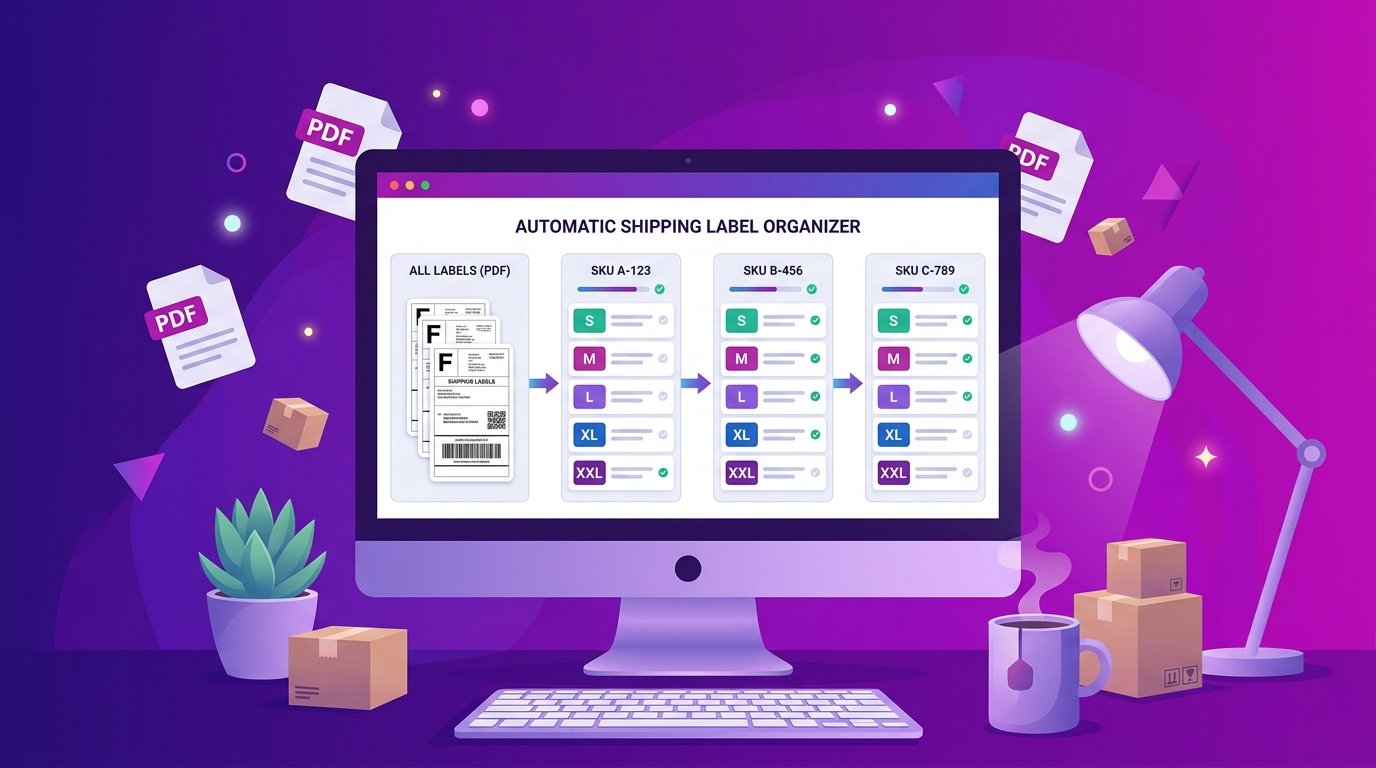
- Upload to EasyOrderLabel's Meesho tool — it automatically sorts labels by SKU and size, crops margins for thermal printing, and generates a picking list
- Print the SKU summary first — this tells your picker exactly how many of each product/size to pull from shelves
- Print the sorted labels — all labels for the same SKU are together, sizes in order (S → M → L → XL)
- Pack in batch: Pick all units of one SKU, lay out the labels in front of you, match size by size, pack, seal, and move to the next SKU
Step 7: Getting Paid by Meesho
Understanding Meesho's payment cycle is crucial:
- Meesho releases payment 7-15 days after delivery (not after dispatch)
- Payment is deposited directly to your registered bank account
- You can track all payments in the "Payments" tab of your supplier dashboard
- Return deductions: If a customer returns an order, the product cost + return shipping is deducted from your next payment cycle
- Penalty deductions: Late dispatch, wrong product, or damaged packaging can result in penalties
10 Tips to Grow Your Meesho Business Fast
- List at least 50 products — more listings = more visibility in search results
- Update listings weekly — add seasonal products (Diwali, Eid, summer collections)
- Respond to customer queries fast — Meesho tracks your response time
- Maintain low return rates — accurate photos and size charts reduce returns dramatically
- Add detailed size charts — include chest, waist, hip, and length measurements in CM
- Use all 5 photo slots — listings with more photos get 40% more orders
- Price competitively — search for similar products on Meesho and price within the same range
- Dispatch within 24 hours — fast dispatch improves your seller score and search ranking
- Track your analytics — check which products sell most and stock more of them
- Don't panic about returns — returns are normal in fashion. Focus on net profit, not gross sales